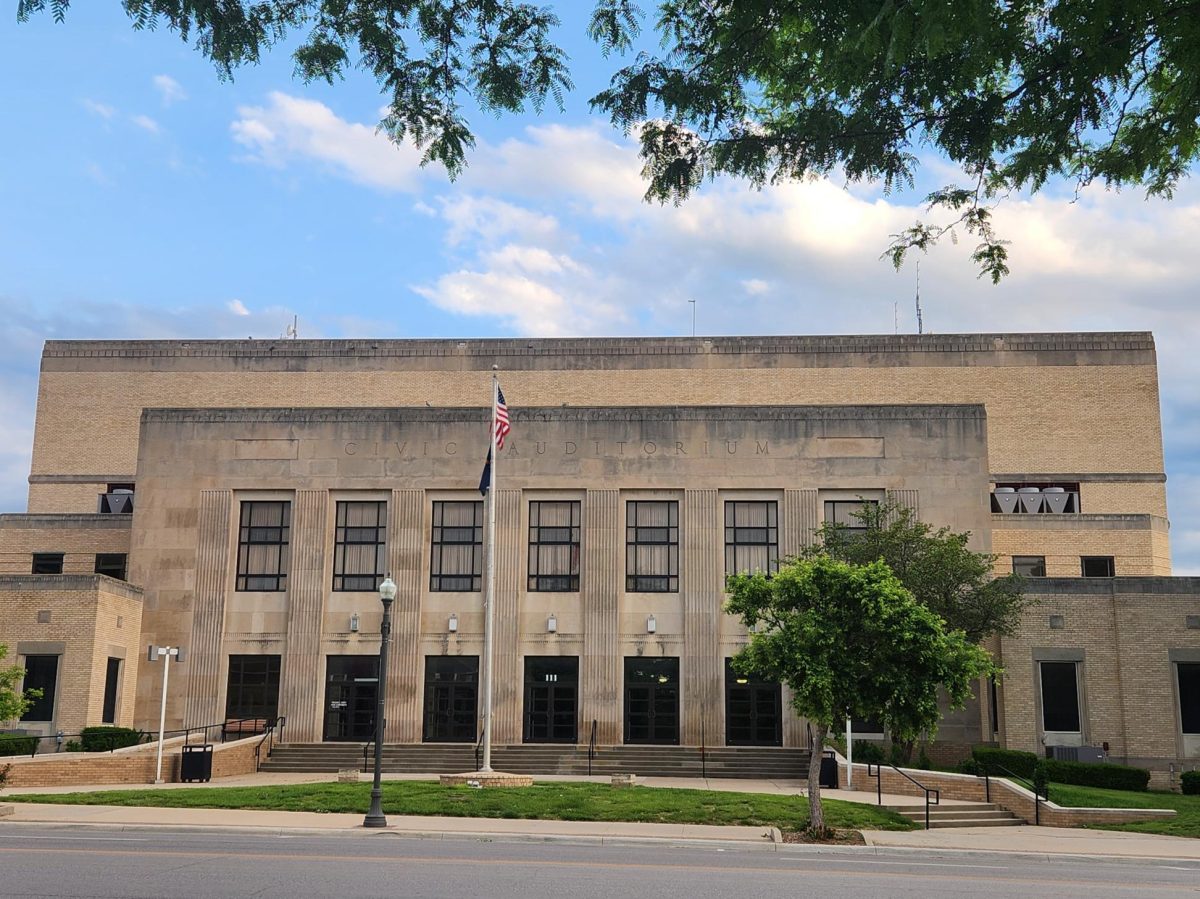
On Nov. 10 and 11, a group of Emporia State students will embark on Jan Todd’s annual 24-hour “E-mersion” experience. Todd, an assistant professor of sociology, will take students on a less than 20-minute drive north of Emporia to Americus, Kansas to broaden their views on rural communities in America.
Americus has a population of 779 according to 2024 population data—just over three percent of the size of Emporia’s. Todd, who will teach a new Rural Sociology course in the spring, said that she wants to get students interested in rural communities, which is why she chose rural areas to be the focus of this semester’s E-mersion.
Although Todd is the creator of the E-mersion experience, Theo Wright, a senior applied sociology student, planned the trip as their applied project. Wright chose Americus as the location because they have a special connection with the town: their uncle is the mayor. With the activities planned, Wright hopes that students will be able to “put themselves in (residents’) shoes” to understand the hardships of living in rural America.
Once they arrive in Americus on the evening of Nov. 10, students will meet with a panel of Americus’ leaders including the mayor, the city clerk and a local teacher. Students will have the chance to discuss the ways of life in that rural area as well as the challenges that their residents face.
One of these challenges is that Americus is a “food desert,” according to Wright and Todd. The only source of groceries within the city limits is a Casey’s convenience store. So, Wright came up with the idea to assign students a budget and allergy restriction for them to shop with. That way, students will get firsthand experience with what it’s like to face the challenge of living in a food desert.
Afterward, students will go to the city center, where they will stay the night, to prepare their meals. Participants will complement their experience by watching A Place at the Table, a documentary about food insecurity.
The next day, students will participate in a “sociology scavenger hunt” where they will have the opportunity to interview Americus residents and observe “social artifacts.” They will discuss their observations with each other afterwards. They will also take a tour of the local fire department and eat at a local diner.
“It’s this real immersion that allows these students to take that 24-hour perspective and say, ‘What would I do if I were working for, like, the state, or (worked for) an agency (where) this is their clientele?’” said Todd.
Despite their familial connection to Americus, Wright admitted that “Emporia is as rural of an experience as (she’s) gotten.” Already, the experience planning the trip has surprised them. Wright had to set up a meeting with the Americus city council and ask for permission to host the E-mersion in Americus. She said she was shocked at how welcoming and cheerful they were.
Although Todd wants to bring attention to the challenges faced in rural communities, she says that not “all is woe with the world” for rural people.
“There’s this social cohesion that only small communities sometimes are able (to have). So, we’re hoping to observe that, too,” she said. “It’s like there’s just a different approach to how you do life.”
Wright and Todd both recognized that the urban world places stereotypes on rural communities that aren’t always true. Some of these stereotypes are that people living in rural areas are all conservative, religious, unhappy, uneducated and poor, they said. But, both say it’s important to recognize that rural areas are much more diverse than this. Recognizing and deconstructing these stereotypes is essential to working in the field of sociology, said Todd.
Many jobs in the field of sociology work with individuals in rural areas. For example, caseworkers for the Department of Children and Families are needed in rural areas. This trip could help future sociology workers to develop critical thinking skills necessary for those types of jobs.
“You need to learn how to understand the story of people from a nonjudgemental perspective–checking your bias,” Todd explained, “ and this prepares a student to hopefully embed a few of those things quickly…if you’re going to work in any government sector or agency or nonprofit…you are going to deal with the rural world.”
Planning the E-mersion trip has already given Wright experience she needs for her future career. Wright wants to be a professor, and they said they “want to be the kind of professor that…does a lot of interactive things.”
“There’s this sense of ‘appreciating’ when we think about sociology,” said Todd. “That it’s not just about urban issues or issues that are caught in what we would call the modern system. And the rural world is modern. We do this thing of calling it traditional, but in so many ways, the modern world is what they’re having to deal with. It’s encroached the way the world works. So I don’t want to spell that out for our students. I want them to discover.”