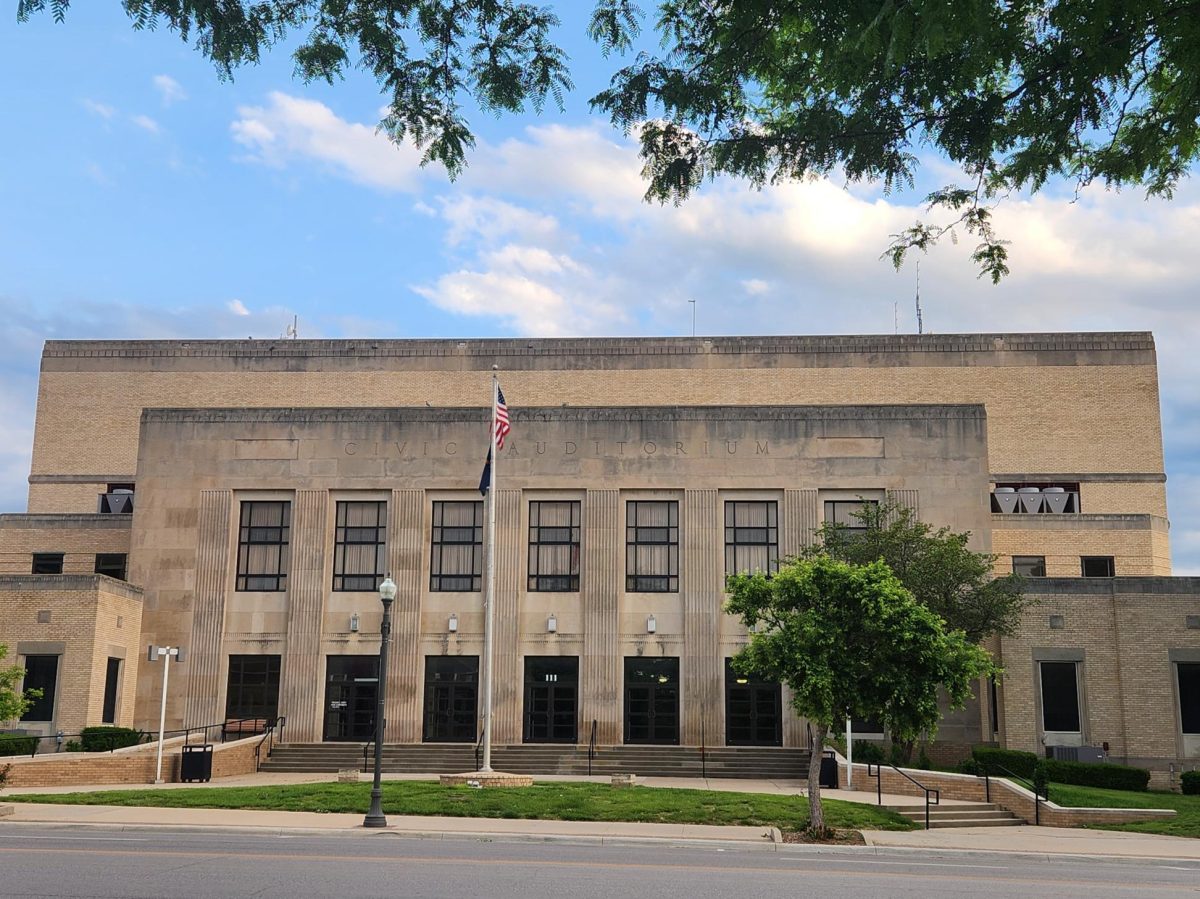
Emporia State’s music program hosted its second annual day-long SheSings Women in Music Festival on Saturday, May 2 in Beach Music Hall and King Hall’s Bruder Theatre. The festival, founded by director of choral activities Joshua Donaldson and in its second year, highlights women in music in an effort to “inspire social change and foster inclusivity” in the profession.
The event serves as a way to bring awareness and visibility to the work of women in the music field while also helping students “see the possibilities” of what music can look like in their lives, said Kate Bergman, a professor of flute at ESU and member of the SheSings programming committee. The catalyst for SheSings, in part, was discovering a lack of music festivals in the midwest arena, particularly women in music festivals, said Donaldson.
He called the festival a “love letter.”
“For me, this is kind of, selfishly, a love letter to the women in my life, because as just a queer human growing up in southeast Kansas that was pretty oppressive, it was women who rallied around me and didn’t treat me any differently,” they said. “They uplifted me, they really just made me feel like a normal human being, and I noticed that every kind of phase of my life … I was always surrounded by women because those are the people who just accepted me.”
This year’s SheSings festivities involved music reading sessions, master classes, a Q&A and performances all presided over by ESU students. The event featured six women artists across backgrounds in instrumentals, composition and music theatre, most with Kansas and Missouri ties, for an array of content and expertise.
For Bergman, the growing presence of women in the music discipline is “very personal”. She touched on gender disparities in the music sphere, particularly in regard to disciplinary fame and music education.
“I mean, my family’s made a lot of sacrifices in order for me—I mean, I always wanted to teach college flute,” said Bergman. “And so I am, but they know on Thursday nights, if they have something going on, I can’t be there.”
That’s because on Thursday evenings, Bergman teaches flute choir to a group of mostly female students.
“So, yeah, I think it’s personally, this whole festival is just really important for my students, I think, because I hope that they don’t have to make all the sacrifices that I have,” she said.
And for the festival to become something that “means something to someone” is the goal, said Donaldson, who shared an anecdote about a conversation with a student who emphasized its impact.
“If it means something to someone or reaches someone, then we’ve done our job because we just want people to come in with an open mind and leave with a different perspective or leave with a new idea or something as simple as leave with knowing a new singer that you’ve never been—that you’ve never known before, and now you can go put them on your Spotify playlist,” they said.