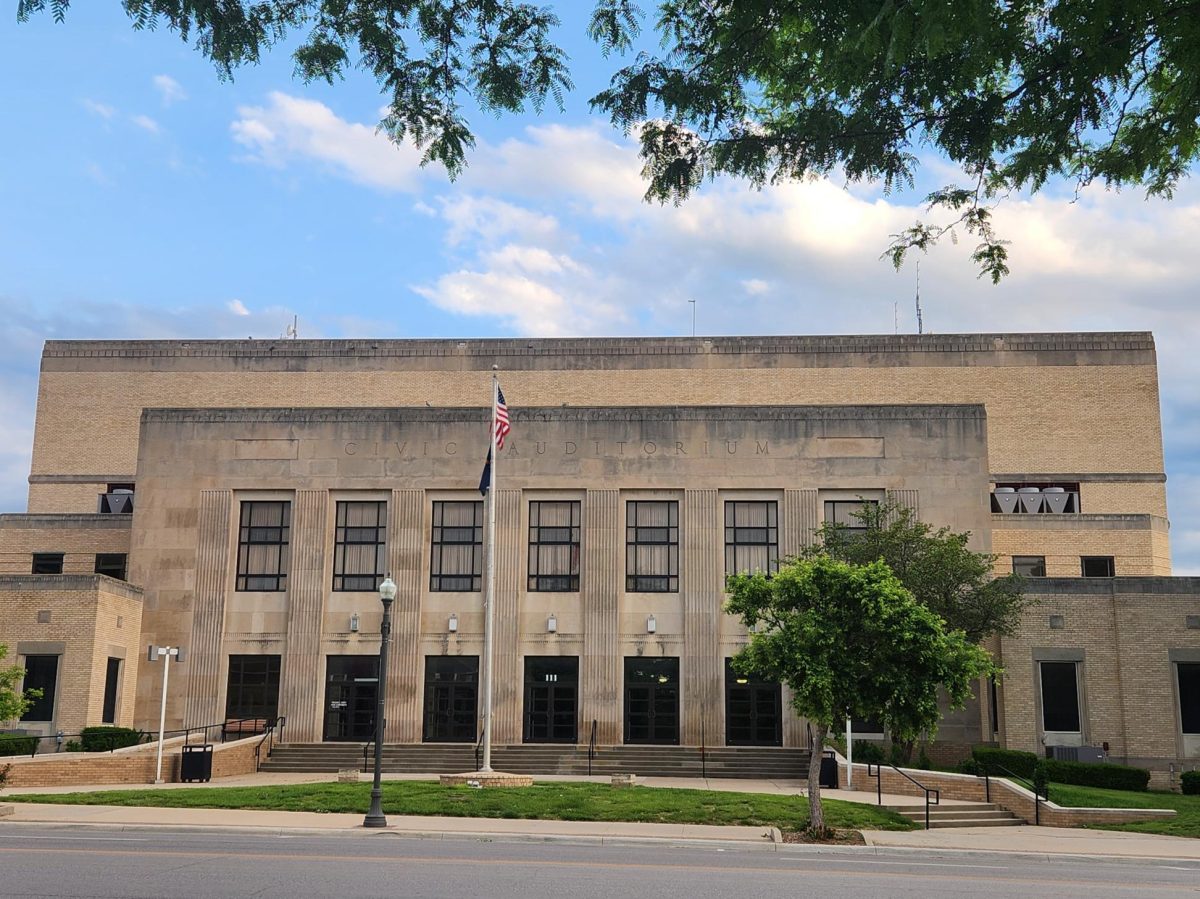
South and Southeast Morse halls, the final two buildings to be torn down as part of the Morse complex demolition project, will be demolished this summer.
According to Director of Facilities Planning Peter Hauff, a loose time line is in place for the project. The goal is to begin demolition shortly after the spring semester, he said.
Hauff predicts that the demolition will take approximately two to three months to complete and will likely be ongoing at the beginning of the fall 2026 semester. He said that they hope to have the southeast wing finished before the start of the school year so that the sidewalk from Memorial Union behind the Nursing and Student Wellness Center will be cleared for students to use.
Morse Drive, or the campus pedestrian mall, will be utilized for equipment and material transportation. If the project bleeds into the fall, the drive will have restricted or limited access.
Green space is set to replace the remainder of the Morse complex and will operate as a student quad. A cooling tower and electrical switch gear near the side will either need to be moved or hidden, Hauff side. With the demolition of the buildings and construction of the quad, Hauff hopes that the project will be mostly done by the end of the year if not completely finished.
The capital project will cost roughly $2.5 million according to Hauff. $1.5 million of the total cost is estimated for the actual demolition with the remaining million going toward rearranging equipment, building the quad and relocating the programs still utilizing Morse’s space. TRIO and the forensic science program still occupy South and Southeast Morse.
The TRIO offices will move into the basement of Memorial Union next to Corky’s Cupboard, with 10 offices in the space for the program’s 10 professional staff, said Kristi Bolen, TRIO programs director. Staff predict they will be moved into the new space by the end of the month.
Bolen says that the major difference of TRIO’s new space is that the entire TRIO program will reside in the same space for the first time. In the Morse Complex, the college and high school programs have two separate wings. She said that being in Memorial Union could help increase their foot traffic and may also benefit their high school students; their parents will be able to drop them off or park right outside the building.
“We’ll continue to be able to provide the same services that we always have,” said Bolen. “It’s just like, a different location, maybe (it will) look a little bit different, but for the most part, it doesn’t change anything that we’re doing … the university has always been really good about making sure that we have the space that we need to do tutoring and do those kinds of things.”
On the other hand, the Master of Science in Forensic Science program is facing a significant reduction in space due to the relocation. The program will move to the bottom two floors of Science Hall, according to program director Kristin Rindom, and will only have three rooms allocated for student use. One room will house their Toxicology Lab (SH171), another will be a standard classroom (SH172) and the third room in the basement will be dedicated to crime scene activities and student research (SH016).
“In Morse Hall, students have been able to conduct large‑scale, often messy projects; these will now need to be scaled down or moved to an alternate location,” said Rindom in an email to The Bulletin. “The loss of space will also require us to rethink how we present student research, crime scene activities, and the curriculum to prospective students and tour groups.”
However, Rindom said that students will benefit from having the MSFS program in the same place as it will create “a more convenient and cohesive environment for both students and faculty.”
The forensics program will not complete their move until about mid-May as renovations and IT installations in Science Hall are needed before they relocate completely.