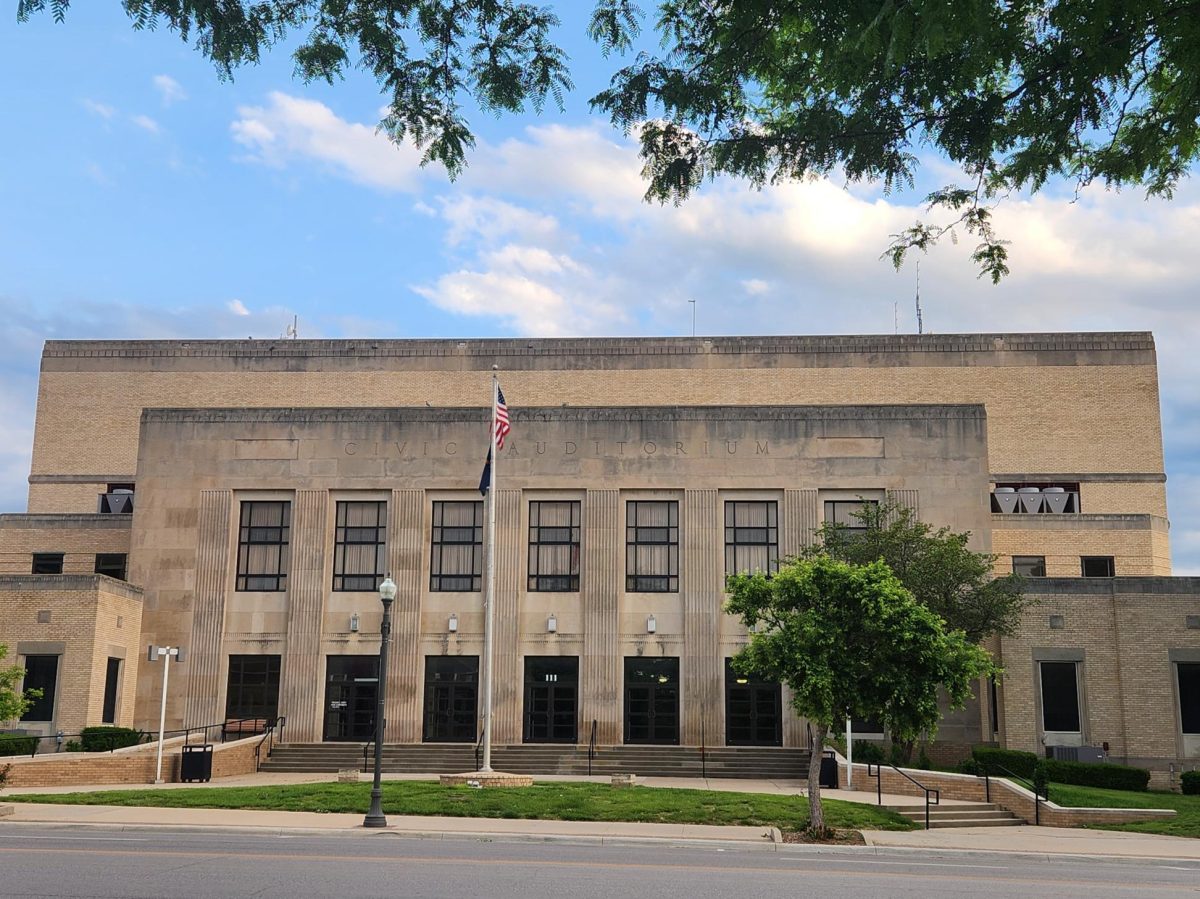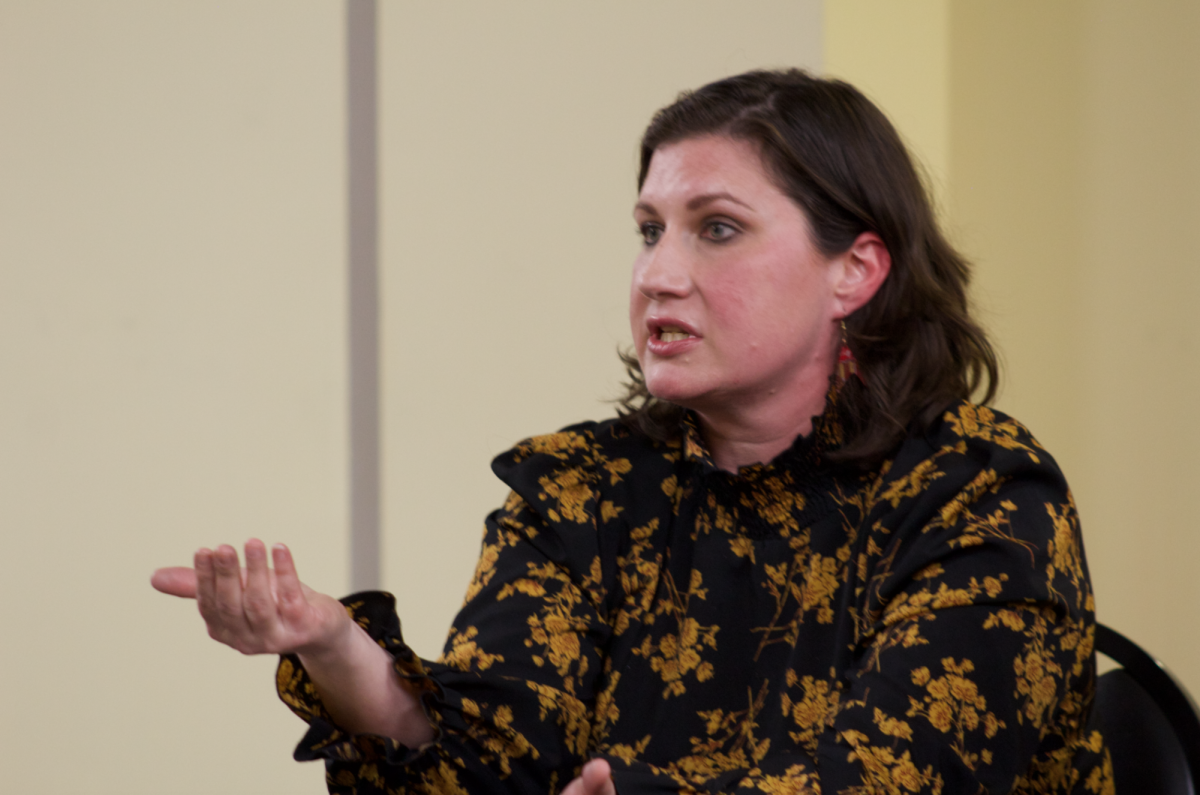
Emporia State is weighing whether to discontinue its Social Change and Spanish Education programs after years of low to no enrollment.
In November and December, deans from the School of Library and Information Management, the School of Humanities and Social Sciences and The Teacher’s College sent letters to Provost Brent Thomas requesting discontinuance of the programs housed in their respective units.
Standards for enrollment set by the Kansas Board of Regents indicate programs should have 25 or more junior and senior majors in a program with 10 students graduating from the program each year.
If the programs at ESU were to be discontinued, no faculty positions or courses would be cut.
‘Hardly validating’ Spanish Ed data
On Feb. 19, Thomas and leaders of HSS and The Teacher’s College, as well as the Academic Affairs Committee of Faculty Senate, met with Spanish program faculty Rachel Spaulding and Juan Pablo Roman Alvarado to debate the fate of the Bachelor’s of Science in Education Modern Languages Spanish degree.
Spanish Education is a joint program housed within both The Teacher’s College and HSS. Spanish courses for the program and specialized teaching methodology are taught by Spanish faculty from HSS.
Enrollment for the Spanish Education program has declined since 2019, and enrollment data shows there have been no students enrolled as first or second majors nor degrees awarded following spring 2023. That year, only one degree was awarded for the BSE at spring commencement.
The lack of enrollment in the program has made it difficult for The Teacher’s College to fulfill state and federal accreditation requirements and keep its teacher licensure permit, said Sara Schwerdtfeger, dean of The Teacher’s College. In her Nov. 18 letter, she called the reporting process for the program “extremely cumbersome.”
“We have to report what’s called three cycles of data, and a cycle could be a semester, it could be a year. This last report that we had to complete, we had to go back so far to find three cycles of data. The data isn’t even hardly validating,” she told the Academic Affairs Committee. “We’re going back three, four, five years to be able to pull enough data … but it’s not even accurate data anymore because no one is in the program.”
That reporting process also includes reporting courses being taught for the program. While Spanish courses that fulfill some of the program requirements are taught, Schwerdtfeger emphasized that majors in the Spanish Education program must also be taking those courses to report them. Without students in the major, those courses don’t count toward current state reporting on the Spanish Education program from The Teacher’s College.
“We can’t just say we’re teaching this program but (majors are) not enrolled in the program. They have to be enrolled in the program,” she said.
The two courses taught specifically for the BSE, which are Spanish teaching methods courses, have not been offered over the past three years because no students are pursuing degrees in Spanish Education.
The Spanish Education program has also faced issues with maintaining a full-time faculty member to lead it. In 2019, Luisa Perez, the lead faculty member for the program who specialized in Spanish teaching methodology, retired from ESU. Since then, there has been a “lack of consistent leadership” to help maintain the program due to faculty changes within the broader Spanish program as recently as last academic year.
For that reason, the discontinuance request of the program came as a “shock” to Spaulding, she told the group of administrators and Faculty Senate members.
“I would have thought I would have heard about it in the past because the person who was primarily responsible for the functioning of the BSE and recruiting was someone who’s no longer working with us, no longer in our school,” she said.
Issues with faculty have also led to a lack of representation of the program on the Council on Teacher Education, another reason for the discontinuance recommendation outlined in Schwerdtfeger’s Nov. 18 letter. The Council on Teacher Education is the governing council of undergraduate teacher education programs that lead to teaching licensure.
Mark Meister, dean of the School of Humanities and Social Sciences, said no faculty from the Spanish program were available to serve on the council
“Accreditation and the work of Sara’s group is incredibly heavy and when there’s lack of numbers or no numbers and a void on an important committee to do this, the foundational work of assessment and program learning outcomes, I had to make the strong call to recommend for discontinuance,” he said.
Calls for time to improve Spanish Ed
In a joint Feb. 6 letter to the provost, Spanish and English faculty from HSS said they understood concerns with low enrollment, but believed “inadequate time and resources invested into program maintenance” explained the declining enrollment. They noted “clear, cost neutral, and productive ways to improve these numbers” if given the time.
“It makes sense from a bottom line perspective, as I said in the letter, to discontinue a program if there’s nobody in it,” Spaulding said at the Feb. 19 meeting. “I wanted to flush out and contextualize some of the factors that brought us to this position and ultimately say that I think it’s a short sighted position to just eliminate the program for the future.”
In the letter, faculty argued that there was not proper attention given to program recruitment or maintenance after Perez’s retirement, which was influenced by both changes within the Spanish program’s faculty and effects of the 2022 university restructuring.
With both Spaulding and Ramon Alvarado now serving as the 2 full-time faculty members for the Spanish program, they said the needed experience, resources and personnel are available to support the education arm. This includes serving on CTE and collaborating with other faculty in the English and Modern Languages programs to manage the program.
The joint letter also proposed developing a second area of study “that complements the work in the Teachers College” for English education majors and other education students who are “pursuing proficiency in Spanish.” It held that Spanish courses for the BSE Modern Languages Spanish degree align with requirements for the Spanish minor and the Languages, Literary Studies and Writing major and serve as electives for the BSE in English.
On the topic of recruitment, Spaulding suggested to administrators that numbers could be improved through faculty efforts to recruit current students into the program, which raised concerns over faculty’s ability to impact program enrollment numbers. Meister said he knew of “no indicators” that suggest a faculty member, regardless of tenure status and “outside of outstanding teaching”, will directly impact the enrollment of an academic program. He said that even the hiring of Spanish faculty after Perez’s exit didn’t stop declining enrollment numbers in Spanish Education.
One of those faculty members, Ramon Alvarado, came to ESU as a tenure-track faculty member in 2022. The joint letter stated he was expected to “maintain the growing (Bachelors of Arts Modern Language) Spanish program and meet needs in World Literature for the BSE English program,” not recruit for or retain enrollment in the Spanish Education program.
“So if we’re going to talk about faculty being central to recruiting of students, we also have to remember that we have partners in collaboration on student affairs who specialize in (program recruitment and admissions)” said Meister, who also noted that faculty across higher education have “taken a backseat” to those specifically tasked with recruiting students.
“And so, to say that the resources aren’t directly being available and made by any university, and that is potentially causing low to no enrollment, in my mind, is a red herring and a fallian argument. There’s many different entities that go into (it) and pinpointing that to a tenure track faculty or employing a resource in another area just simply doesn’t work in higher education today.”
Spaulding said she took issue with the recruitment argument, saying that faculty have the ability to recruit students into programs even after they start at ESU, especially if they are undecided in terms of a profession.
“I do think recruiting is part of my job as a faculty member, whether I’m tenured or not, and when I meet any of my students in my classes … I see those students as potential individuals who might want to major in the BSE or BA, or do the minor, but sometimes you don’t know right from the beginning, you have to take a few classes in that discipline and then figure out where you want to go, and sometimes we’re not all called to being teachers until much later,” said Spaulding.
‘Out of nowhere’
The Social Change program, too, is facing threat of discontinuance with a decision expected in the coming weeks regarding the program’s fate. A meeting for program discontinuance was held on Feb. 5.
Wooseob Jeong, dean of the School of Library and Information Management, cited enrollment as the purpose for the discontinuance request in a Dec. 4 letter to the ESU provost. Program numbers for the major peaked in fall 2022 with four majors before bottoming out last fall with zero, he said. Only 4 majors and sixteen minors have been awarded since 2021.
Jeong indicated that while students have double majored in the program, those numbers are not included in the enrollment data. At ESU, most program enrollment figures are tracked based on the number of students who have a program listed as their first major.
In a Dec. 8 response letter, Mallory Bishop, program director for the Social Change program, recognized the program’s numbers were “not satisfactory” but said a lack of consistent leadership and oversight of the major over the past five years played a role in enrollment numbers.
Bishop told The Bulletin she was not aware of any consideration regarding discontinuing the Social Change program. She said there were no discussions previously about issues affecting the major that would put it in jeopardy.
“It was really out of nowhere … I found out in December when I got a call from the provost, but it was something that was moving forward without any kind of remediation or any awareness that this was something that was even being considered,” said Bishop.
In the December letter, Bishop asked that the program be put on a 3-year performance plan to grow enrollment, especially as “(ESU’s) internal review process intended to evaluate programs every three years was never implemented for (the Institute of Interdisciplinary Studies).” If it had, the Social Change program would have been able to utilize the 3-year plan to identify strategies to boost enrollment, she said.
“I suggest doing this now as opposed to discontinuing the major,” wrote Bishop, who called elimination of the program “premature.”
Even though the classes taught in the Social Change program will stay intact if the program is discontinued, Bishop pointed to the value of having the program designated as an area of study.
They wrote that the program “affirms (to families, counselors and prospective students) Emporia State’s commitment to harmony, equity and respect.” Ending it could send an unintended message that ESU “does not prioritize equity and creating better futures.”
“Just knowing that something like (the social change program) is present and that it is an option for folks, I think gives comfort, gives people hope, and I think we need that so much,” they told The Bulletin.
Bishop clarified that reason alone isn’t something that should dictate whether anything in higher education is kept. However, she wants a chance to give the Social Change program a chance to improve.
“We can’t be sustained by hope,” she said. “But again, I think, thinking through the multitude of reasons why this program probably shouldn’t be necessarily outright just saved, right, or allowed to continue, but should be put on some kind of performance plan to give it a fair chance,” she said.